

In the golden stillness of an Italian summer, where time seems to linger among ancient stone villages and sunlit vineyards, the past has a way of whispering through the present. A Tuscan Mystery begins in this suspended moment, calm on the surface yet filled with the quiet tension of something long buried waiting to return.
At the heart of the story lies an unexpected discovery: an enigmatic artifact linked to a forgotten goddess. What first appears to be nothing more than a historical curiosity destined for a museum display soon reveals itself to be something far more unsettling. The object seems to carry a presence, an echo of an ancient force that refuses to remain silent. From the moment it emerges into the modern world, subtle disturbances begin to ripple outward, touching the lives of those who encounter it.
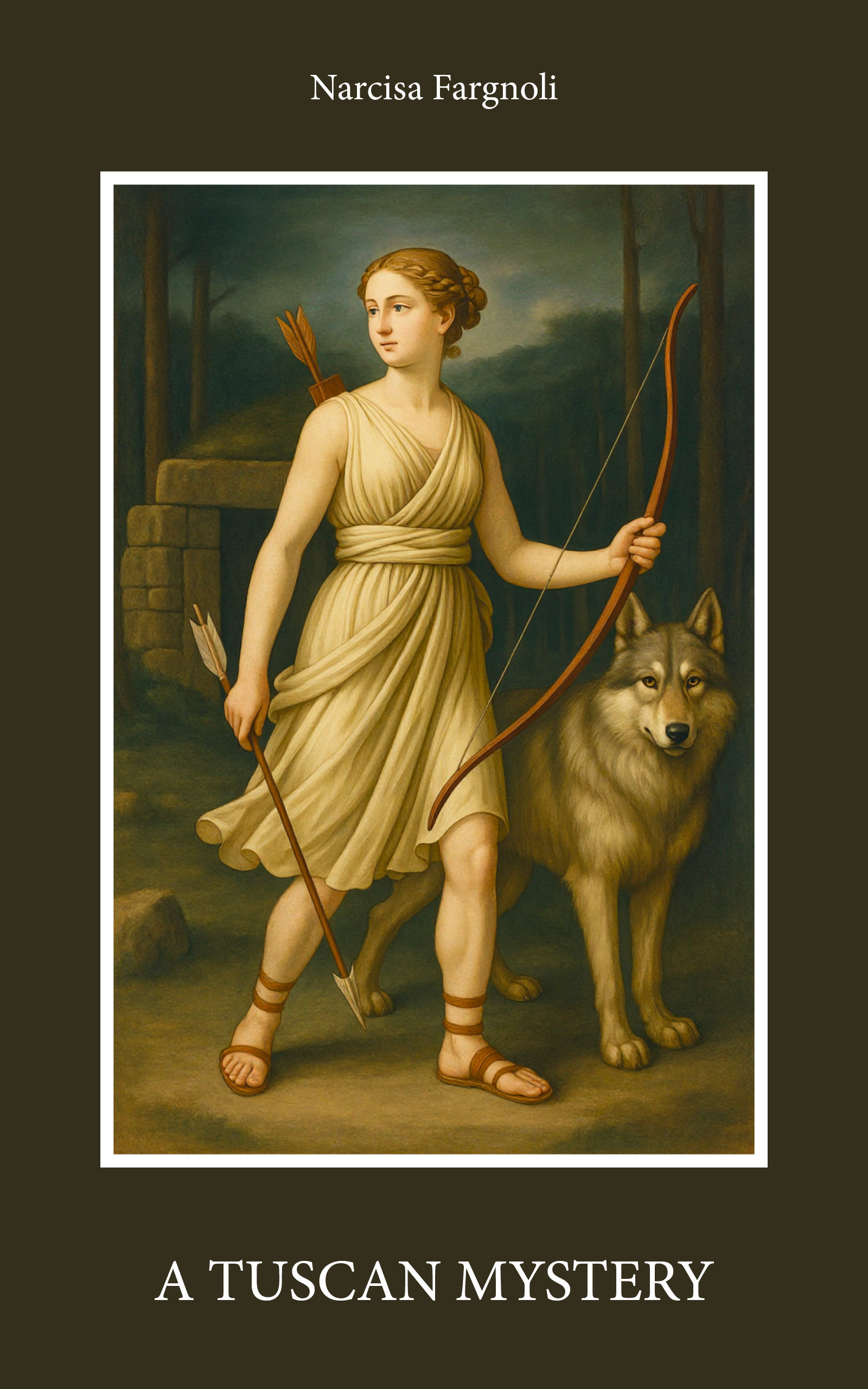
The novel unfolds through the winding alleys of Tuscan villages, the silent halls of dusty archives, and nights thick with the uneasy feeling that reality itself may be shifting. As the protagonists search for answers, they are drawn deeper into a labyrinth of forgotten legends, strange coincidences, and visions that blur the boundary between history and myth. Each clue seems to lead back to a single figure: the mysterious goddess whose story has been lost to time but whose influence may never have truly disappeared.
What makes A Tuscan Mystery particularly compelling is the way it intertwines genres. It is at once a mystery, a psychological exploration, and a journey into mythological and occult traditions that have quietly shaped human belief for centuries. The narrative explores how ancient stories persist beneath the surface of modern life, waiting for the right moment, or the right discovery, to re-emerge.
Tuscany itself becomes an essential character in the novel. Its landscapes, steeped in centuries of culture and history, provide the perfect backdrop for a story where the supernatural does not feel impossible, but rather like an extension of forgotten knowledge. The quiet countryside, medieval villages, and ancient ruins create an atmosphere where the past feels alive and the unknown never seems far away.
As the investigation unfolds, the central question grows increasingly unsettling. Who, or what, is truly pulling the strings? And perhaps more importantly, what price must be paid to uncover the truth? The deeper the protagonists delve into the mystery, the more they realize that the answers they seek may demand sacrifices they never imagined.
Ultimately, A Tuscan Mystery is a journey into the shadows of history and the fragile boundary between belief and reality. It invites readers to consider whether myths are merely stories, or whether they are memories of something older, something powerful, and perhaps something that has never truly left us.
In a world that prides itself on reason and modernity, the novel reminds us of an unsettling possibility: sometimes the past is not finished with us. And sometimes, what we uncover was never meant to be found.